
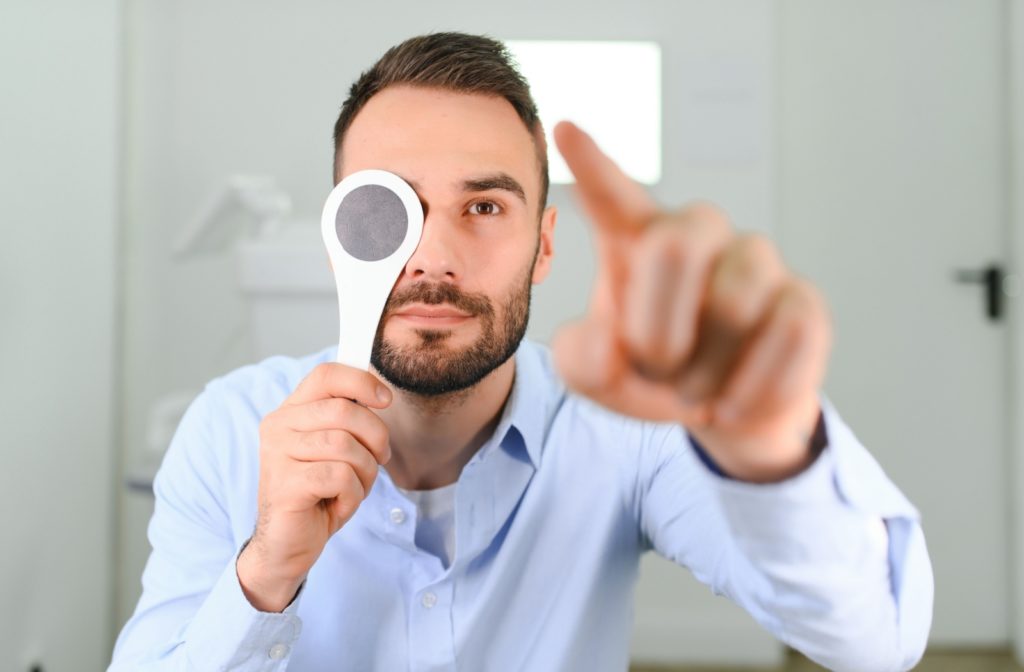
Depth perception issues are problems with accurately judging the distance between objects, typically caused by the eyes not working together properly. This can make everyday tasks like walking, driving, or reaching for objects more difficult and less precise.
Can Depth Perception Issues Be Caused by Vision Problems?
Depth perception issues and vision problems are closely connected because accurate depth perception depends on both eyes working together. When the eyes are not properly aligned, the brain may struggle to combine visual input, making it harder to judge distance and space.
In some cases, depth perception issues may be linked to binocular vision dysfunction (BVD), a condition caused by subtle eye misalignment. If standard vision treatments do not improve your symptoms, it may be helpful to evaluate whether a coordination issue between the eyes is contributing to your depth perception problems.
What Are Depth Perception Issues?
Depth perception issues occur when the eyes and brain have difficulty working together to accurately judge distance. This can result in bad depth perception, where objects may appear closer, farther away, or misaligned.
Because depth perception depends on both eyes aligning properly, even small inconsistencies can affect how visual information is processed. This article explains what depth perception issues are and why even small misalignments can significantly affect visual accuracy.
Signs of Depth Perception Problems

Common signs of depth perception problems include:
- Difficulty judging distances when walking or reaching
- Frequently bumping into objects
- Trouble with stairs or curbs
- Motion sickness or clumsiness
- Eye strain or fatigue
- Difficulty reading or focusing
- Headaches
- Dizziness
These symptoms may be subtle at first but can become more noticeable over time, especially during visually demanding tasks. Many people with depth perception issues report feeling off balance or unsure of their surroundings, especially in unfamiliar environments.
Common Causes of Depth Perception Issues
Depth perception issues can develop for several reasons, often involving how the eyes and brain coordinate visual input.
Primary causes include:
- Eye misalignment, also known as BVD
- Neurological processing challenges
- Convergence insufficiency
- Traumatic brain injury or concussion
Other related conditions such as strabismus, amblyopia, and post-concussive syndrome may also contribute to depth perception problems.
Common triggers include:
- Fatigue
- Stress
- Prolonged screen use
- Illness or visual strain
Because depth perception depends on precise coordination, even small disruptions can lead to noticeable depth perception problems. These issues often develop gradually and may become more noticeable over time.
Symptoms and Functional Impact
| Symptom | Functional Impact |
| Dizziness | Difficulty navigating environments |
| Poor depth judgment | Trouble reaching or grabbing objects |
| Motion sensitivity | Discomfort in busy spaces |
| Eye strain | Reduced focus and productivity |
| Balance issues | Increased risk of falls |
Sudden Depth Perception Issues
Sudden depth perception issues can occur when there is an abrupt change in how the eyes or brain process visual information. This may be caused by fatigue, stress, new glasses, illness, or neurological changes.
If depth perception problems appear suddenly or worsen quickly, it is important to seek evaluation to rule out underlying causes.
Depth Perception Issues While Driving
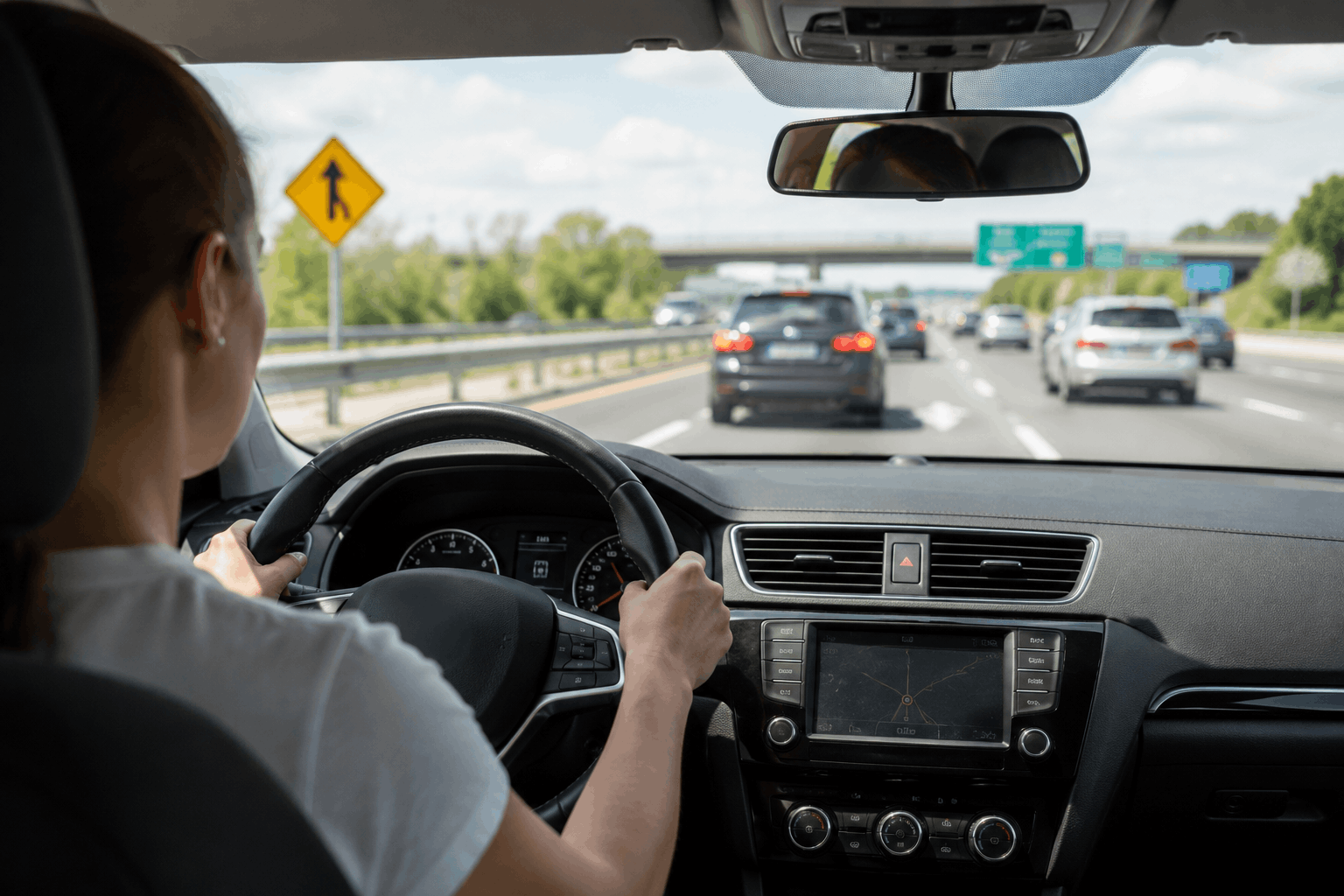
Depth perception driving challenges can make it difficult to judge distances between vehicles or merge safely..
People with depth perception issues while driving may experience:
- Difficulty gauging speed and distance
- Trouble parking or changing lanes
- Increased visual fatigue
- Anxiety in traffic
This is why depth perception driving difficulties are often one of the first noticeable signs of a visual coordination problem.
Driving Challenges Related to Depth Perception
| Driving Task | Potential Difficulty |
| Merging lanes | Misjudging distance of other cars |
| Parking | Difficulty aligning vehicle |
| Following distance | Driving too close or too far |
| Night driving | Increased visual strain |
How to Test Depth Perception
Understanding how to test depth perception involves evaluating how well both eyes work together.
Common methods include:
- Cover test for eye alignment
- Depth perception test for stereo vision
- Binocular vision assessment
- Symptom questionnaires
Wondering if you have Binocular Vision Dysfunction? Take the BVD assessment to get your score and take control of your diagnosis.
Depth Perception Testing Methods
| Test Type | What It Measures |
| Cover test | Eye alignment |
| Stereo tests | Depth accuracy |
| Binocular vision test | Eye coordination |
| BVD assessment | Symptom patterns |
How to Fix Depth Perception Issues
Tackling how to fix depth perception issues starts with identifying the underlying cause. In many cases, treatment focuses on improving how the eyes work together.
Common approaches include:
- Microprism glasses
- Vision therapy
- Treatment for binocular vision dysfunction
At NeuroVisual Medicine, treatment focuses on pinpointing the root cause of depth perception issues and improving how the eyes work together as a system.
Addressing the root cause of depth perception issues can significantly improve visual comfort, coordination, and daily function. Treating depth perception issues early can help improve both visual accuracy and overall quality of life.
Does Astigmatism Cause Depth Perception Issues?
Astigmatism can contribute to depth perception issues if it affects how clearly each eye sees. However, depth perception problems are more commonly linked to how the eyes align and work together rather than clarity alone.
How Depth Perception Issues Relate to Binocular Vision Dysfunction (BVD)
Depth perception issues are often linked to binocular vision dysfunction (BVD), where the eyes struggle to maintain proper alignment.
When the eyes are slightly misaligned, the brain must work harder to combine images. This added strain can lead to dizziness, headaches, and difficulty focusing.
One specific form of BVD, called vertical heterophoria, can also contribute to depth perception issues and symptoms such as poor coordination and imbalance.
Because depth perception issues are often linked to eye misalignment, identifying BVD early can help prevent symptoms from worsening over time. If you suspect your symptoms may be related to BVD, taking a short BVD assessment is often the first step.
When to See a NeuroVisual Specialist
Depth perception issues are not always immediately recognized as vision-related, which can delay proper diagnosis and treatment.
You may benefit from evaluation if you experience:
- Persistent depth perception issues
- Difficulty driving or navigating
- Frequent dizziness or headaches
- Trouble with balance or coordination
If these symptoms continue, depth perception issues may be related to an underlying visual coordination problem. A NeuroVisual Specialist can determine whether depth perception issues are related to eye alignment.
Find a NeuroVisual Specialist Near You
If depth perception issues are affecting your daily life, finding a trained provider can help identify the cause and guide treatment.
NeuroVisual Specialists use advanced testing to evaluate how the eyes and brain work together and determine whether visual misalignment is contributing to symptoms.
Frequently Asked Questions About Depth Perception Issues
What are depth perception issues?
Depth perception issues are problems with accurately judging distance and spatial relationships. This happens when the eyes and brain do not coordinate properly. As a result, objects may appear closer or farther away than they actually are.
What causes depth perception issues?
Depth perception issues are caused by problems with eye alignment, neurological processing, or binocular vision dysfunction. When the eyes do not work together correctly, the brain struggles to interpret depth accurately. This can lead to symptoms such as dizziness and poor coordination.
Can depth perception issues affect driving?
Yes, depth perception issues can affect driving by making it difficult to judge distances between vehicles. This can impact merging, parking, and maintaining safe following distance. Because driving relies heavily on visual accuracy, these issues can reduce confidence and safety.
How do you test depth perception?
Depth perception is tested by evaluating how well both eyes work together. Tests may include stereo vision tests, cover tests, and binocular vision assessments. These tests help identify whether misalignment is affecting depth accuracy.
Can depth perception issues be corrected?
Yes, depth perception issues can often be corrected depending on the cause. Treatments such as prism lenses, vision therapy, or BVD treatment can improve alignment. Addressing the root issue helps restore more accurate depth perception.
What are signs of depth perception problems?
Signs of depth perception problems include difficulty judging distance, bumping into objects, and trouble with balance. These symptoms often occur because the brain is compensating for misaligned visual input. Over time, this can lead to fatigue and discomfort.
Do glasses help with depth perception issues?
Yes, depth perception glasses such as microprism lenses can help improve alignment between the eyes. By correcting how images are processed, they reduce strain on the visual system. This allows the brain to interpret depth more accurately.
Can BVD cause depth perception issues?
Yes. Binocular vision dysfunction can cause depth perception issues because the eyes are slightly misaligned. This misalignment forces the brain to work harder to combine images. As a result, depth perception and spatial awareness can be affected.
